Home Living
A modern house isn't just a look — it's a different way a home works, and a different job to own well. What day-to-day life in one is actually like, and how to keep the architecture worth what you paid for it.
How the house works
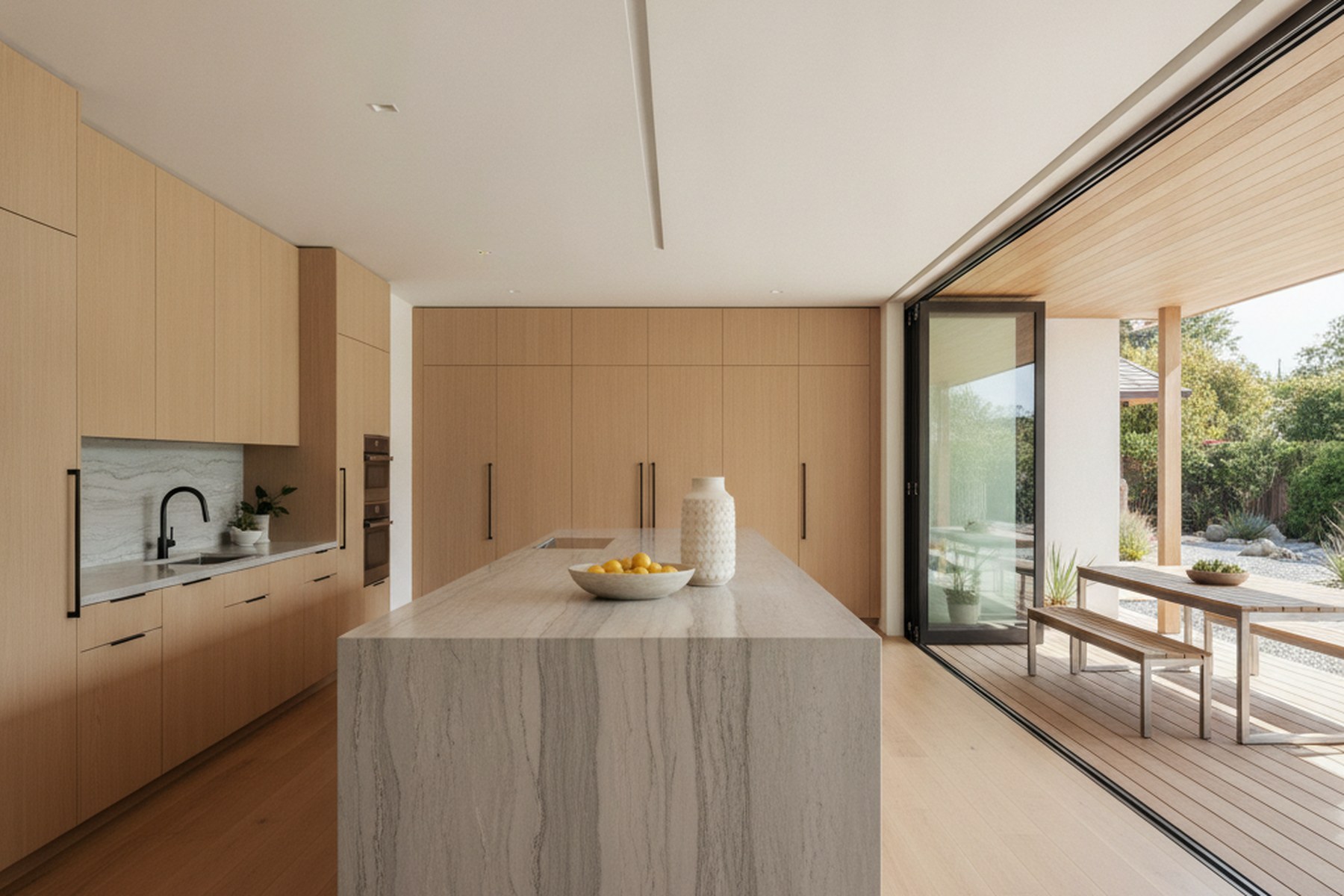
The whole point of a modern plan is that the walls stop mattering. Glass runs floor to ceiling, the patio or atrium sits at the same level as the living room, and the house is organized around light and a garden instead of a hallway. In Orange County's climate that isn't a rendering fantasy — it's how the house actually gets used, most months of the year.
Living in one means furnishing for sightlines instead of wall space, lighting a ceiling that has no attic above it, and letting the courtyard do the job a family room does in a conventional plan. Owners who fight the plan lose; owners who live the way the house was drawn get more usable home out of fewer square feet.
The owner's calendar
None of these are disasters. All of them are schedules — and knowing where each one is in its cycle is most of owning a modern house well.
Flat and low-slope roofs are a maintenance schedule, not a defect. Foam-and-coating cycles are routine; the mistake is skipping them — or "fixing" the house with a pitched roof that ends its life as architecture.
Radiant tubing in the slab is quiet, even, dust-free heat — and original to the 1960s in many houses, which means inspection and pressure-testing matter. A repiped system is a genuine selling point later.
Original single-pane walls are period-correct and thermally awful. Upgrading without wrecking the sightlines is specialist work — thin-frame dual glazing exists, and cheap retrofit frames are how houses lose their lines.
Tongue-and-groove ceilings, exposed beams, period fixtures — the detail is the premium. Maintain it, document it, and think twice before any remodel that removes what buyers of these houses are paying for.
Efficiency
Modern houses were drawn for passive comfort — cross-ventilation, deep overhangs sized to the sun, thermal mass in the slab — and they respond unusually well to the right upgrades. Cool-roof coatings go on a flat roof invisibly. Solar sits on a flat or low-slope roof without changing the street view. Ductless heat pumps condition a post-and-beam plan that has nowhere to hide ductwork, and roof-deck insulation can be added from above during a scheduled re-roof.
The wrong upgrades are just as available: bulky retrofit window frames, a furnace closet carved out of an open plan, a pitched-roof conversion. The test for any improvement is simple — does it work with what the architect drew, or against it? And when a remodel does happen, dispose of what comes out responsibly; California makes it easy to recycle electronics, appliances and construction material instead of landfilling them.
In Orange's Eichler historic districts, exterior changes go through the city's design standards, and preservation-minded owners can pursue Mills Act property-tax contracts — the details are in our Eichler guide.
Owning the right one
Not every modern house asks the same things of its owner. A restored mid-century original is a stewardship project with a tax angle. A California ranch is the forgiving entry point. A new coastal contemporary trades maintenance for systems complexity. Which one fits is a lifestyle question before it's a budget question — and it's exactly the conversation to have before touring anything.
Start with the architecture guide for what each kind of modern is, where Orange County keeps them, and what to check before you buy.
Contact
Whether you're keeping a modern house right, getting one ready to sell, or looking for the one that fits how you live — talk to someone who knows what these houses are.